You've trained hard. You've eaten well. You're lying in bed with hours before your alarm, and you can't fall asleep. Tomorrow's competition runs through your mind. Your body is tired but your brain won't stop.
This is where 4-7-8 breathing becomes essential. Dr. Andrew Weil developed this technique specifically for sleep, and athletes have found it particularly effective for the pre-competition nights when rest matters most.
The Pattern
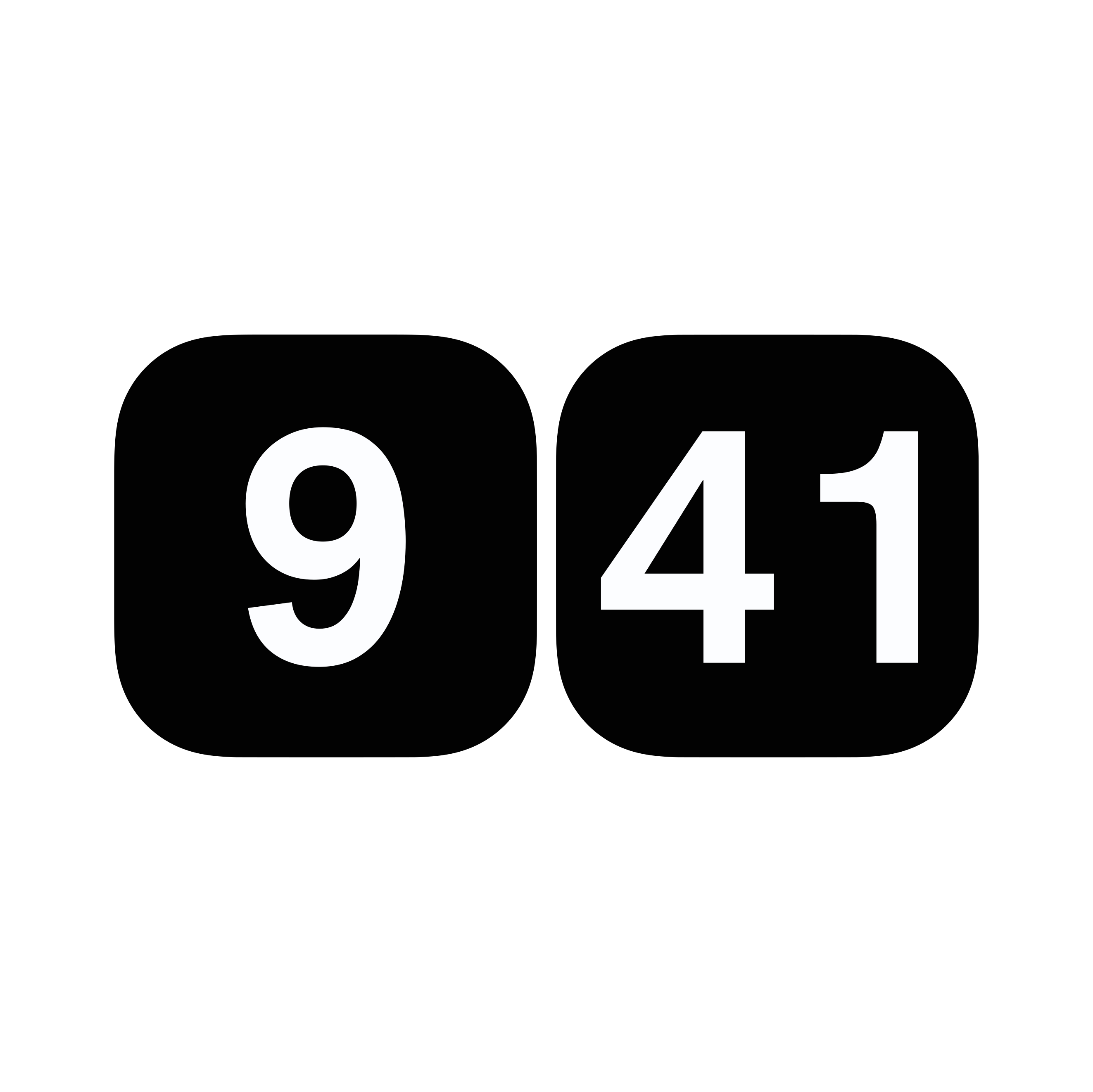
4-7-8 breathing follows a specific ratio:
- Inhale quietly through your nose for 4 counts
- Hold your breath for 7 counts
- Exhale completely through your mouth for 8 counts
The exhale should be audible—a whooshing sound as you release through slightly pursed lips.
Then repeat. Start with 4 cycles and work up to 8.
Why This Pattern Works for Sleep
The extended hold and exhale phases make 4-7-8 particularly sedating:
Extended Breath Hold
The 7-count hold is long enough to significantly elevate carbon dioxide levels in the blood. This CO2 increase triggers a parasympathetic response—the body interprets the pause as a signal that there's no emergency, no need for rapid breathing.
Dominant Exhale
The 8-count exhale is twice as long as the 4-count inhale. This 2:1 exhale-to-inhale ratio maximizes vagal nerve activation, shifting the nervous system strongly toward parasympathetic (rest-and-digest) mode.
Rhythmic Occupation
The counting occupies the mind with a task that replaces anxious rumination. You can't worry about tomorrow's performance while counting to seven.
Oxygen-CO2 Balance
The pattern creates a specific blood gas environment that promotes drowsiness. The long hold and exhale reduce oxygen slightly while elevating CO2—conditions that naturally accompany the transition to sleep.
How to Practice
Position
Lie in your normal sleep position. Tongue should rest gently against the roof of your mouth, just behind your front teeth. It stays there throughout the exercise.
The Sequence
- Empty first: Before starting, exhale completely through your mouth with a whoosh
- Inhale: Close mouth, inhale quietly through nose for 4 counts
- Hold: Hold breath for 7 counts (keep relaxed, no tension)
- Exhale: Exhale through mouth for 8 counts, making a whoosh sound
- Repeat: This is one cycle. Complete 4 cycles initially, working up to 8
Counting Speed
The absolute duration of counts doesn't matter much—what matters is the ratio. If 4-7-8 seconds is too challenging, you can use shorter counts initially. The proportion (4:7:8) is what produces the effect.
Many athletes find that naturally slowing the count as they become drowsier helps deepen the sedation.
Athletic Applications
Pre-Competition Sleep
The night before competition is often the hardest for sleep. Adrenaline from anticipation, mental rehearsal that won't stop, awareness of how much sleep matters—all conspire against rest.
4-7-8 breathing provides a concrete task that interrupts this spiral. Research on cortisol shows that the breathing pattern reduces stress hormones that otherwise interfere with sleep onset.
Start the technique when you get into bed, before sleeplessness becomes frustrating. Four to eight cycles usually produces significant drowsiness.
Post-Training Wind-Down
After evening training, the body may still carry residual activation that delays sleep. 4-7-8 breathing accelerates the transition from sympathetic (training) to parasympathetic (recovery) dominance.
Combine it with other wind-down practices for optimal effect.
Mid-Night Waking
Athletes who wake during the night—common with high training loads or pre-competition anxiety—can use 4-7-8 to return to sleep. The technique is as effective for sleep maintenance as for sleep onset.
Travel and Time Zones
Crossing time zones disrupts sleep, precisely when recovery matters most. 4-7-8 breathing helps override the body's confusion about when to sleep.
Building the Practice
Start Before You Need It
Don't wait for a difficult night to learn 4-7-8 breathing. Practice on regular nights until the technique is automatic. Then it's available when you most need it.
Consistency Improves Effect
Like other breathing techniques, 4-7-8 becomes more effective with practice. The nervous system learns to respond more quickly and completely to the pattern.
Dr. Weil recommends twice-daily practice during waking hours—not just at bedtime—to build the response. Morning and evening sessions train the pattern so it's powerful when you use it for sleep.
The 6-Week Mark
Initial effects are often modest. After 4-6 weeks of regular practice, users typically report substantially stronger effects. The technique is building neurological associations that take time to establish.
Combine with Sleep Hygiene
4-7-8 breathing works best as part of comprehensive sleep practice: - Consistent sleep and wake times - Cool, dark, quiet bedroom - Limited screens before bed - Evening meditation practice
The breathing technique won't overcome fundamentally poor sleep habits, but it powerfully enhances good ones.
Comparison with Other Techniques
vs. Box Breathing
Box breathing is excellent for stress management but less specifically sedating. The equal phases (4-4-4-4) don't create the same exhale dominance as 4-7-8. Box breathing is better for pre-competition arousal regulation; 4-7-8 is better for sleep.
vs. Physiological Sigh
The physiological sigh is fastest for acute anxiety but isn't specifically designed for sleep. Use physiological sighs to calm acute anxiety, then transition to 4-7-8 for sleep induction.
vs. Body Scan
Body scan meditation is excellent for sleep but takes longer and requires more attention. 4-7-8 is simpler and more portable, though they combine well.
Troubleshooting
Light-headed during holds: The 7-count hold may initially feel long. Start with shorter holds (3-4 counts) and build tolerance. Never push to the point of discomfort.
Can't make the exhale last 8 counts: You may be inhaling too much or exhaling too quickly. Slow down. If needed, shorten all phases proportionally (e.g., 2-3.5-4).
Mind still races: This is normal initially. The technique interrupts racing thoughts, but they may return. Simply begin another cycle. Over time, the calming effect becomes more complete.
Fall asleep before completing cycles: This is success, not failure. Let yourself fall asleep.
Technique doesn't feel natural: It won't at first. Persist through the awkward period. After a week or two of daily practice, it becomes smooth.
The Athlete's Sleep Advantage
Sleep is where recovery happens. HRV improves during sleep. Growth hormone releases during sleep. Memories consolidate during sleep. Skills learned in training strengthen during sleep.
Athletes who sleep well outperform athletes who don't—all else being equal.
4-7-8 breathing provides reliable access to sleep when it matters most. It's portable, quick to apply, and becomes more powerful with practice. No supplements, no devices, no side effects.
The nights before competition are too important to leave to chance.
Key Takeaways
- The pattern: Inhale 4 counts, hold 7 counts, exhale 8 counts
- Designed specifically for sleep: The extended hold and exhale are more sedating than other patterns
- Practice before you need it: Build the skill on regular nights
- Improves with practice: Full effects develop over 4-6 weeks
- Combine with good sleep hygiene: The technique enhances but doesn't replace fundamentals
Return is a meditation timer designed for athletes who understand that recovery happens during sleep. Build the practices that support your rest. Download Return on the App Store.