Long before Mihaly Csikszentmihalyi researched flow states, before sports psychologists studied peak performance, ancient Chinese philosophers were writing about wu wei—effortless action, doing without doing, moving with rather than against the nature of things.
The Taoists described a state where action flows naturally without resistance, where the practitioner seems to accomplish everything while trying nothing. Athletes know this state intimately—and Taoist wisdom offers deep insight into accessing it.
Understanding Taoism
The Philosophy
Taoism emerged in China around 2,500 years ago, primarily through the Tao Te Ching attributed to Lao Tzu and the writings of Chuang Tzu. Unlike philosophies focused on effort and striving, Taoism points to something counterintuitive: supreme effectiveness often comes from not-forcing.
The Tao: The word "Tao" (or "Dao") means "way" or "path." It refers to the natural order of things—the way rivers flow, seasons change, and life unfolds. The Tao can't be fully described (attempts to define it move away from it), but it can be aligned with.
From the Tao Te Ching:
"The Tao that can be told is not the eternal Tao."
The practical implication: Stop trying to force things and align with how they naturally want to move. Effectiveness comes not from imposing your will but from harmonizing with the flow of reality.
Core Principles
Naturalness (Ziran): Things unfold most effectively according to their nature. A tree doesn't try to grow—it grows naturally. Water doesn't try to flow downhill—it flows naturally. Performance, too, can be natural.
Non-contention (Pu): The uncarved block symbolizes the original, unprogrammed state before conditioning. Returning to simplicity—before all the overthinking and self-consciousness—enables natural excellence.
Softness overcomes hardness: Water is soft but wears away rock. The flexible survives while the rigid breaks. In athletics, yielding at the right moment creates power.
Wu Wei: Effortless Action
What It Means
Wu wei (無為) literally translates as "non-action" or "non-doing," but this is misleading. It doesn't mean doing nothing—it means acting without forcing, moving without resistance, accomplishing without strain.
From the Tao Te Ching:
"The Tao does nothing, yet nothing is left undone."
What wu wei looks like: - Action that flows naturally from situation - Movement without internal conflict - Accomplishment without sense of effort - Being fully effective while seeming effortless
The Water Metaphor
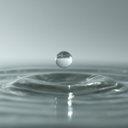
Taoists constantly use water as the supreme metaphor for wu wei:
From the Tao Te Ching:
"Nothing in the world is softer and weaker than water; yet for attacking the hard and strong, nothing can surpass it... The soft overcomes the hard; the weak overcomes the strong."
What water teaches: - Water flows around obstacles rather than forcing through - Water always finds the lowest path (path of least resistance) - Water is patient—constant soft pressure moves mountains - Water adapts to any container yet remains itself
For athletes: Be like water. Don't force; flow. Don't resist; adapt. Find the path of least resistance to your goal. Patient persistence accomplishes more than forceful assault.
Wu Wei in Action
How it manifests: - The martial artist who redirects force rather than opposing it - The runner whose stride seems effortless at high speed - The basketball player who moves through defenders like water - The golfer whose swing is powerful yet relaxed
The feeling: Wu wei feels like not-trying while performing optimally. It's the absence of internal conflict, the presence of natural alignment, the experience of action happening through you rather than by you.
The Taoist Flow State
Ancient Description of Modern Flow
What psychologists now call "flow"—the state of optimal experience where action and awareness merge—was described by Taoists millennia ago:
Chuang Tzu's Cook:
"A good cook changes his knife once a year—because he cuts. A mediocre cook changes his knife once a month—because he hacks. I've had this knife of mine for nineteen years... There are spaces between the joints, and the blade has no thickness. If you insert what has no thickness into such spaces, there is room to move the blade around."
The cook's knife never dulls because he works with the ox's natural structure, not against it. His cutting is wu wei—finding the spaces, moving without resistance.
What this describes: - Effortless engagement with task - Working with rather than against - Mastery that transcends technique - Action flowing from understanding
Parallels to Modern Flow Research
Flow state characteristics (Csikszentmihalyi): - Complete absorption in task - Merging of action and awareness - Loss of self-consciousness - Distorted sense of time - Intrinsic motivation
Wu wei characteristics (Taoism): - Complete naturalness in action - No separation between doer and doing - Absence of self-conscious effort - Transcendence of ordinary time - Action arising from alignment, not desire
The descriptions are remarkably similar—separated by 2,500 years but pointing to the same experience.
Taoist Practices for Athletes
Cultivating Non-Doing
The paradox: You can't "try" to achieve wu wei—trying is precisely what prevents it. You can only create conditions where it emerges.
Creating conditions:
1. Release attachment to outcome The more you grasp at results, the more they elude you. The more you release attachment, the more freely you perform.
From the Tao Te Ching:
"When nothing is done, nothing is left undone."
Practice: Before competition, consciously release attachment to outcome. "I will do my best. What happens, happens." This isn't resignation—it's freedom.
2. Eliminate unnecessary effort Most effort is wasted fighting ourselves. Internal conflict—trying while doubting, wanting while fearing—creates resistance.
Practice: Notice where you're creating internal conflict. Where are you fighting yourself? What would it feel like to let that go?
3. Trust training Wu wei emerges from deep preparation. The cook didn't achieve effortless cutting on day one—he had decades of practice. Then the practice disappeared into natural action.
Practice: Train thoroughly. Then in performance, trust the training. The conscious mind steps back; the trained self performs.
4. Align with the situation Wu wei means reading what the situation wants and aligning with it rather than imposing predetermined plans.
Practice: Be responsive rather than reactive. Read what's unfolding. Move with it rather than against it.
Softness and Yielding
The teaching: Hardness and rigidity lead to breaking. Softness and flexibility lead to enduring and overcoming.
From the Tao Te Ching:
"A man is born gentle and weak; at his death he is hard and stiff. Green plants are tender and filled with sap; at their death they are withered and dry. Therefore, the stiff and unbending is the disciple of death; the soft and yielding is the disciple of life."
Physical application: Relaxed muscles are faster than tense muscles. Relaxed breathing is more efficient than forced breathing. Fluidity defeats rigidity.
Mental application: A flexible mind adapts; a rigid mind breaks. When plans don't work, yield and adapt. Stubbornness is weakness.
Practice: Cultivate relaxation within intensity. Can you perform at high levels while staying soft? This is the Taoist ideal.
The Uncarved Block
The concept: Pu—the uncarved block—represents the original state before all the conditioning, before the inner critic, before self-consciousness made everything complicated.
For athletes: Before you learned to doubt yourself, before coaches' voices filled your head, before anxiety became your companion—there was just you and the game. The uncarved block is that original relationship.
Practice: Return to simplicity. What did you love before you complicated it? Can you find that again? Play like you played before anyone was watching, before anything was at stake.
The Valley Spirit
The teaching: The valley receives all—water flows to it, it nourishes life. Low position is a position of strength, not weakness.
From the Tao Te Ching:
"The valley spirit never dies; it is called the mysterious feminine. The gateway of the mysterious feminine is called the root of heaven and earth."
For athletes: Receptivity is strength. The valley receives; the mountain eventually crumbles. Can you be receptive to feedback, to the game, to the moment—rather than projecting your will onto everything?
Practice: Listen more than you speak. Receive more than you impose. Read the game rather than forcing it.
Taoist Movement Arts
Tai Chi Chuan
The practice: Tai chi, developed in China around the 12th century, embodies Taoist principles in movement. Slow, flowing sequences integrate breath, body, and mind.
Taoist elements: - Softness overcomes hardness - Movement without resistance - Rooting and yielding - Integration of opposites (yin/yang)
For athletes: Tai chi develops body awareness, balance, and relaxed power. Even brief practice trains the "soft within strong" quality valuable in all sports.
Qigong
The practice: Qigong ("energy cultivation") includes breathing exercises, slow movements, and meditation to develop and circulate qi (life energy).
Taoist elements: - Breath as foundation - Energy cultivation through practice - Stillness within movement - Natural, unforced development
For athletes: Qigong develops breathing capacity, body awareness, and mental calm. Recovery-focused qigong aids restoration.
Internal Martial Arts
The practices: Bagua, Xingyi, and other internal martial arts apply Taoist principles to combat: - Redirecting rather than opposing force - Yielding to overcome - Effortless power - Reading and flowing with opponent
For athletes: These arts develop reactive awareness, economy of motion, and the ability to find openings. Even non-martial athletes benefit from the movement principles.
Wu Wei in Different Sports
Ball Sports
Reading the game: Wu wei in ball sports means reading what the game wants rather than imposing predetermined plans. The ball wants to go somewhere—where? The defense has gaps—where? Flow with what's emerging.
Practice: Watch film not for plays but for patterns. Develop instinct for what wants to happen. Then let it happen through you.
Combat Sports
Yielding to overcome: Water doesn't meet force with force—it redirects, flows around, and eventually overcomes. In combat sports, this means timing, positioning, and using opponent's energy rather than constantly imposing your own.
From Chuang Tzu:
"The true man of old did not oppose the few, did not boast of his accomplishments, did not scheme. Such a one could miss without regret, succeed without self-satisfaction."
Practice: Find the spaces, like the cook's knife. Don't force—flow. Read what the opponent gives you.
Endurance Sports
Sustainable effort: Wu wei in endurance is about finding the pace that you can maintain indefinitely—effort without strain, intensity without tension. The runner in wu wei covers miles while seeming to float.
Practice: Find the pace where effort disappears into rhythm. Not pushing, not holding back—just flowing. This is sustainable excellence.
Technical Sports
Natural technique: In sports requiring precise technique—golf, archery, throwing events—wu wei is the swing that happens without trying, the release that occurs at the perfect moment without conscious timing.
Practice: Train technique until it's automatic. Then in performance, get out of the way. Let the trained movement perform itself.
Meditation and Wu Wei
Sitting in Stillness
Taoist meditation: Taoism includes sitting meditation, but with a different flavor than Buddhist mindfulness. The emphasis is on naturalness—not trying to control the mind but letting it settle like muddy water clears when left alone.
Practice: Sit quietly. Don't try to meditate—just sit. Let the mind do what it does. Eventually, naturally, it settles. This is wu wei applied to meditation itself.
Moving Meditation
Practice in motion: Taoist practice often involves moving meditation—walking, tai chi, qigong. The quality of wu wei is cultivated through movement, not just stillness.
For athletes: Consider practice itself as meditation. Full presence, natural flow, no forcing. Training becomes cultivation.
Natural Breathing
The teaching: Taoists emphasize natural breathing over forced techniques. Watch an infant breathe—full, relaxed, automatic. This is the model.
Practice: Rather than imposing breath patterns, return to natural breathing. Let the breath be full, relaxed, unforced. Trust the body's wisdom.
Key Takeaways
- Wu wei is effortless action, not inaction—doing without forcing, accomplishing without strain
- Flow state has ancient roots—Taoists described it 2,500 years before modern psychology
- Be like water—soft, adaptive, persistent, flowing around obstacles
- Softness overcomes hardness—relaxation enables speed and power
- Release attachment to outcomes—grasping prevents flow
- Trust your training—preparation enables effortless performance
- Create conditions, don't force—wu wei cannot be achieved through trying
Return is a meditation timer for athletes seeking the ancient flow that Taoists called wu wei. Train your mind to move with rather than against, and watch performance become effortless. Download Return on the App Store.